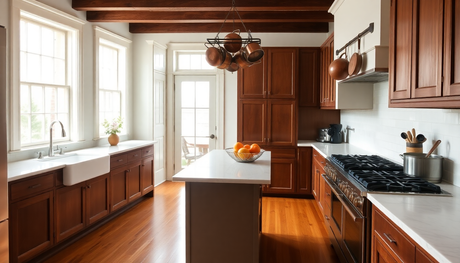
When you step into your kitchen each morning to brew your first cup of coffee, do you feel a sense of calm and efficiency, or do you find yourself frustrated by poor layout and inefficient design? The truth is, most homeowners don't realize that kitchen design goes far beyond aesthetics. A truly functional kitchen is one that has been thoughtfully planned with your daily workflow in mind. At PoshHaus in Keene, NH, we've helped countless families transform their kitchens from chaotic spaces into beautifully organized rooms that actually work for their lifestyle.
The kitchen is often called the heart of the home, and for good reason. It's where families gather, meals are prepared, and memories are made. But if your kitchen isn't designed with functionality in mind, it can quickly become a source of stress rather than joy. Whether you're planning a complete kitchen renovation or simply looking to optimize your current space, understanding the principles of good kitchen design is essential.
In this comprehensive guide, we'll walk you through everything you need to know about designing a kitchen that actually works. We'll explore the classic work triangle concept, discuss how to create efficient prep zones, explain proper appliance spacing, and share strategies for optimizing your storage. By the end of this article, you'll have the knowledge and confidence to create a kitchen that not only looks beautiful but functions seamlessly for your daily needs.
Understanding the Kitchen Work Triangle
The kitchen work triangle is one of the most fundamental concepts in kitchen design, and for good reason. This principle has been guiding kitchen designers for decades because it addresses the core reality of how we actually use our kitchens. The work triangle connects three essential work zones: the sink, the stove, and the refrigerator. These three appliances form the backbone of most kitchen activities, and their placement relative to each other dramatically impacts how efficiently you can work.
The concept behind the work triangle is simple but powerful. When these three elements are positioned correctly, you minimize unnecessary movement and create a natural flow that makes cooking and food preparation more efficient. Imagine preparing a meal: you need to retrieve ingredients from the refrigerator, wash and prepare them at the sink, cook them on the stove, and then serve. If these stations are scattered across your kitchen, you'll spend half your time walking back and forth. If they're positioned thoughtfully, you'll move naturally from one task to the next.
The ideal work triangle should have each leg measuring between four and nine feet. This distance is based on ergonomic research that shows this range allows for efficient movement without excessive walking. If any leg of the triangle is shorter than four feet, the space becomes cramped and uncomfortable. If any leg exceeds nine feet, you're wasting energy on unnecessary movement. The total perimeter of the triangle should ideally be between twelve and twenty-six feet.
However, it's important to understand that the work triangle is a guideline, not a rigid rule. Modern kitchens, especially open-concept designs, sometimes require modifications to this traditional principle. The key is to understand the underlying principle: minimize unnecessary movement between your primary work zones. If you have a kitchen island, for example, it might serve as a secondary work zone that creates multiple triangles or work zones within your overall kitchen layout.
When planning your kitchen layout, start by considering where your major appliances will be positioned. The refrigerator should be easily accessible from your main work area, but not so close that it creates a bottleneck. The sink is typically positioned along an exterior wall where plumbing is readily available, and it serves as a natural gathering point in the kitchen. The stove or cooktop should be positioned with adequate ventilation and clearance from other elements.
One common mistake homeowners make is placing the refrigerator directly next to the stove. While this might seem efficient in terms of the work triangle, it's actually problematic because the heat from the stove can affect the refrigerator's efficiency and lifespan. Similarly, placing the sink directly next to the stove can create safety concerns and make it difficult to work at either station comfortably.
The work triangle concept also helps you avoid what designers call "kitchen traffic jams." If your kitchen is positioned so that the main pathway through your home cuts directly through your work triangle, you'll constantly have family members or guests interrupting your cooking. This is particularly important in open-concept homes where the kitchen flows into living areas. By understanding the work triangle, you can position your appliances to minimize this interference.
Exploring Different Kitchen Layouts
Understanding the work triangle is just the beginning. The actual layout of your kitchen depends on your space, your needs, and your lifestyle. There are several classic kitchen layouts, each with its own advantages and disadvantages. By understanding these options, you can determine which layout works best for your situation.
The Galley Kitchen
The galley kitchen features two parallel countertops with a walkway between them. This layout is highly efficient for a single cook because everything is within arm's reach. The work triangle is naturally compact, and movement is streamlined. However, galley kitchens can feel cramped, and they don't work well if multiple people are cooking simultaneously. This layout is common in smaller homes, apartments, and older houses.
If you have a galley kitchen, the key to making it work is maximizing vertical storage and keeping the space organized. Wall-mounted cabinets, open shelving, and clever storage solutions can help you make the most of your limited space. The workflow in a galley kitchen is essentially linear, so positioning your appliances in a logical sequence makes sense.
The L-Shaped Kitchen
The L-shaped kitchen is one of the most popular layouts because it offers flexibility and efficiency. Two perpendicular countertops create an L shape, with appliances and work zones distributed along both walls. This layout naturally creates a good work triangle and allows for efficient workflow. The corner where the two countertops meet can be utilized for storage or as a secondary work zone.
One advantage of the L-shaped kitchen is that it works well in open-concept homes because it doesn't require a central island to function efficiently. The layout also allows for a natural gathering space at the end of one counter, making it easy to incorporate seating. However, corner cabinets in L-shaped kitchens can be difficult to access, so careful planning is needed to ensure these spaces are utilized effectively.
The U-Shaped Kitchen
The U-shaped kitchen features three walls of cabinetry and countertops, creating an enclosed work area. This layout maximizes storage and counter space, and it naturally creates an efficient work triangle. The U-shape also provides excellent workflow because everything is within easy reach, and there's minimal wasted movement.
U-shaped kitchens work particularly well for serious cooks or large families who need plenty of counter space and storage. The layout also provides good separation from the rest of the home, which can be an advantage if you prefer a more enclosed cooking space. However, U-shaped kitchens can feel cramped in smaller spaces, and the corner cabinets can be challenging to access.
The Island Kitchen
The island kitchen features a central island in addition to perimeter cabinetry. This layout is increasingly popular in modern homes, particularly in open-concept designs. The island can serve multiple purposes: additional counter space, extra storage, a secondary cooking zone, or a casual dining area. Islands can dramatically improve workflow by creating multiple work zones and reducing the distance between appliances.
However, islands require adequate space to function properly. You need at least three feet of clearance on all sides of the island to allow for comfortable movement and to prevent the island from becoming a traffic obstacle. If your kitchen is too small for a proper island, it can actually hinder workflow rather than improve it.
The Peninsula Kitchen
A peninsula is similar to an island but is connected to the perimeter cabinetry on one end. This layout provides many of the benefits of an island while requiring less space. Peninsulas are excellent for creating additional counter space and can serve as a casual dining area or a secondary work zone. They're particularly useful in open-concept homes where you want to maintain some separation between the kitchen and living areas.
Creating Efficient Prep Zones
Beyond the basic work triangle, a truly functional kitchen should have distinct prep zones designed for specific tasks. Modern cooking often involves multiple simultaneous activities, and having dedicated spaces for different tasks makes the process much more efficient and enjoyable.
The Primary Prep Zone
Your primary prep zone is where most of your food preparation happens. This is typically located near the sink and should have ample counter space for washing, chopping, and assembling ingredients. The ideal prep zone should be at least three to four feet long and positioned so that you have easy access to your cutting boards, knives, and other prep tools.
When designing your prep zone, consider the height of your countertops. Standard countertop height is thirty-six inches, which works well for most people. However, if you're particularly tall or short, you might want to consider a custom height that's more comfortable for you. Some designers recommend varying counter heights throughout the kitchen to accommodate different tasks. For example, a slightly lower counter (around thirty-four inches) is better for detailed prep work, while a higher counter (around thirty-eight inches) is more comfortable for standing and working for extended periods.
Lighting is crucial in your prep zone. You need bright, focused light so you can see what you're doing clearly. Under-cabinet lighting is particularly useful because it eliminates shadows and provides direct illumination of your work surface. Consider installing dimmable lights so you can adjust the brightness based on your needs.
The Cooking Zone
Your cooking zone centers around your stove or cooktop and should be designed for safety and efficiency. This area needs adequate counter space on both sides of the stove for placing pots, pans, and ingredients. You should have at least eighteen inches of counter space on each side of your cooktop, though more is better if you have the space.
Ventilation is critical in your cooking zone. A good range hood or ventilation system removes cooking odors, steam, and airborne grease, keeping your kitchen cleaner and more pleasant. The hood should be positioned directly above your cooktop and should be sized appropriately for your stove. An undersized hood won't effectively remove cooking vapors, while an oversized hood can create drafts and waste energy.
The area around your stove should be clear of clutter and obstacles. You don't want cabinets or shelving directly above your cooktop where steam and heat can damage them. Similarly, you should avoid placing flammable items near your stove. Some designers recommend keeping the area immediately around your stove relatively open to allow for safe movement and to prevent accidents.
The Cleanup Zone
Your cleanup zone centers around the sink and should be designed for efficiency and comfort. This is where you'll spend a significant amount of time, so it's worth investing in a quality sink and faucet. Your sink should be large enough to accommodate your largest pots and pans, and it should have adequate counter space on both sides for stacking dishes and rinsing.
Consider the type of sink that works best for your needs. A single-basin sink provides maximum depth and space for large items, while a double-basin sink allows you to separate clean and dirty dishes. Some people prefer a triple-basin sink that includes a small basin for prep work. Undermount sinks create a seamless look and make cleanup easier, while top-mount sinks are more affordable and easier to install.
Your faucet should be functional and durable. A high-arc faucet with a pull-down sprayer is particularly useful because it gives you flexibility in rinsing and cleaning. Make sure your faucet has adequate clearance so you can comfortably fill large pots and pans. Some modern faucets include features like touchless activation, which can be convenient and hygienic.
The area around your sink should include storage for cleaning supplies, dish towels, and other items you use frequently during cleanup. A drawer or cabinet directly under the sink is ideal for storing sponges, brushes, and cleaning products. However, make sure this storage doesn't interfere with plumbing access if you need to make repairs.
Optimizing Appliance Spacing and Placement
The spacing and placement of your appliances is crucial to creating a functional kitchen. Each appliance needs adequate clearance to operate safely and efficiently, and the relationship between appliances affects your overall workflow.
Refrigerator Placement
The refrigerator is typically the largest appliance in your kitchen, and its placement sets the tone for your overall layout. When positioning your refrigerator, consider how you'll access it during cooking. You want it to be convenient but not so close to your work areas that it becomes an obstacle. The refrigerator should have at least one foot of clearance on the side where the door opens to allow the door to swing fully open.
If you have a side-by-side refrigerator, you need adequate clearance on both sides. If you have a French-door refrigerator, you need clearance in front for the doors to open. Consider the traffic flow in your kitchen and position the refrigerator so that opening it doesn't block the main pathway through the kitchen.
The refrigerator should be positioned away from heat sources like the stove or direct sunlight from windows. Heat makes the refrigerator work harder, reducing its efficiency and lifespan. If your kitchen layout requires placing the refrigerator near the stove, consider installing a heat shield or ensuring adequate ventilation between the two appliances.
Stove and Cooktop Placement
Your stove or cooktop should be positioned with safety and ventilation in mind. It should never be placed directly under a window where curtains could catch fire or where drafts could blow out flames. Similarly, it shouldn't be positioned at the end of a counter where someone could accidentally brush against it while walking by.
The area in front of your stove should be clear so you can stand comfortably while cooking. You need adequate counter space on both sides for placing ingredients and finished dishes. If you have a cooktop in an island, make sure the island is large enough to accommodate the cooktop safely and that there's adequate ventilation above it.
Consider the height of your cooktop. Standard cooktops are thirty-six inches high, which works well for most people. However, if you're particularly tall or short, you might want to adjust this height. Some people prefer a slightly higher cooktop (around thirty-eight inches) because it reduces strain on the back and shoulders.
Dishwasher Placement
The dishwasher should be positioned near the sink for convenient loading and unloading. Ideally, it should be within a few feet of the sink so you can easily transfer dishes. The dishwasher should have adequate clearance to open fully, and you should be able to access it without obstruction.
Consider positioning the dishwasher on the side of the sink where you naturally place dirty dishes. If you're right-handed, you might prefer the dishwasher on the right side of the sink. If you're left-handed, the left side might be more convenient. Some kitchens have dishwashers on both sides of the sink, which is ideal if you have the space and budget.
Make sure the dishwasher is positioned so that opening it doesn't block the main pathway through your kitchen. You also want to ensure that the dishwasher doesn't interfere with other appliances or work zones. For example, if the dishwasher is positioned directly next to the stove, the heat from the stove could affect the dishwasher's performance.
Microwave and Small Appliance Placement
Microwaves and other small appliances need dedicated space that's easily accessible but doesn't clutter your main work areas. Many people position the microwave on a wall-mounted shelf or in a cabinet at a convenient height. The ideal height for a microwave is around eye level or slightly below, so you don't have to reach up to use it.
Consider the electrical requirements of your small appliances. You'll need adequate outlets positioned conveniently near where you use these appliances. Under-cabinet outlets are particularly useful because they keep cords out of sight and reduce clutter on your countertops.
Storage Optimization Strategies
A well-designed kitchen isn't just about appliances and work zones; it's also about having adequate, well-organized storage. Poor storage is one of the most common complaints homeowners have about their kitchens, and it's often a sign that the kitchen wasn't designed with storage in mind.
Cabinet Design and Organization
Your cabinets are the foundation of your kitchen storage, and they should be designed to maximize space and accessibility. When planning your cabinets, think about what you actually store and how you use it. Frequently used items should be stored at eye level or within easy reach, while less frequently used items can be stored higher or lower.
Deep cabinets can be difficult to access because items at the back are hard to reach. Consider installing pull-out shelves or lazy Susans in deep cabinets to make items more accessible. Corner cabinets are notoriously difficult to use, so special solutions like corner carousels or pull-out corner shelves can help you utilize this space effectively.
Vertical storage is often underutilized in kitchens. Wall-mounted cabinets that extend to the ceiling can provide significant additional storage without taking up floor space. Open shelving can also be an attractive and functional storage solution, though it requires more organization and maintenance than closed cabinets.
Drawer Organization
Drawers are excellent for storing frequently used items, but they can quickly become disorganized and cluttered. Drawer dividers and organizers can help you keep items separated and easy to find. Consider dedicating specific drawers to specific categories: utensils, cooking tools, linens, and so on.
Shallow drawers are ideal for utensils and small items, while deeper drawers work well for larger items like pots and pans. Some modern kitchens include specialized drawers for specific purposes, such as a warming drawer for keeping dishes warm or a beverage drawer for storing drinks.