When it comes to kitchen design, few elements have as much impact as your cabinet choices. They set the tone for your entire space, influence how functional your kitchen is, and ultimately determine whether your kitchen feels dated or beautifully current. If you're living in New England and considering a kitchen renovation, you're in luck—this region has some of the most exciting cabinet trends happening right now. At PoshHaus in Keene, NH, we've been at the forefront of these design movements, helping homeowners like you discover the perfect cabinet styles that blend timeless appeal with contemporary sophistication.
The kitchen cabinet industry has undergone a remarkable transformation over the past few years. Gone are the days when homeowners had to choose between a limited palette of options. Today, the market is flooded with innovative styles, finishes, and configurations that cater to every aesthetic preference and functional need. Whether you're drawn to the clean lines of modern design, the cozy charm of farmhouse aesthetics, or the timeless elegance of traditional styles, there's a cabinet solution waiting for you.
New England, with its rich architectural heritage and design-conscious population, has become a hotbed for kitchen cabinet innovation. The region's homeowners appreciate quality craftsmanship, durability, and designs that respect the character of their homes while embracing modern conveniences. This unique combination has given rise to several compelling trends that are reshaping how New Englanders approach their kitchen renovations.
Understanding the Kitchen Cabinet Renaissance in New England
The kitchen has evolved from a purely functional space to the heart of the modern home. It's where families gather, where memories are made, and where the quality of your cabinetry directly impacts your daily life. This shift in perspective has driven homeowners to invest more thoughtfully in their cabinet selections, seeking pieces that are not only beautiful but also built to last.
New England's design culture is deeply rooted in authenticity and quality. The region's homeowners tend to favor designs that have substance, that tell a story, and that improve with age rather than looking tired after a few years. This preference has influenced the cabinet trends we're seeing flourish throughout Connecticut, Massachusetts, New Hampshire, Vermont, Rhode Island, and Maine.
The cabinet styles trending in New England right now reflect a sophisticated understanding of how design, functionality, and lifestyle intersect. These aren't fleeting fads that will look dated in five years. Instead, they represent a thoughtful evolution in how we think about kitchen spaces and the role cabinetry plays in creating homes that are both beautiful and livable.
The Enduring Appeal of Shaker Cabinets in New Hampshire and Beyond
When discussing kitchen cabinet trends in New England, it's impossible to overlook the continued dominance of Shaker-style cabinetry. This classic design, which originated with the Shaker religious community in the 18th century, has experienced a remarkable renaissance in recent years. And for good reason—Shaker cabinets represent the perfect marriage of form and function.
Shaker cabinets are characterized by their clean lines, minimal ornamentation, and five-piece door construction. The style features a frame with a recessed panel, creating subtle shadows and visual interest without relying on elaborate details. This understated elegance makes Shaker cabinets incredibly versatile, capable of fitting seamlessly into both traditional and contemporary kitchen designs.
What makes Shaker cabinets particularly appealing to New England homeowners is their authenticity. The region has a deep connection to Shaker heritage, and many homeowners appreciate the historical significance of this design. When you choose Shaker cabinets, you're not just selecting a style—you're honoring a tradition of craftsmanship and quality that has stood the test of time.
The beauty of Shaker cabinets lies in their adaptability. Whether you finish them in a crisp white paint, a warm natural wood stain, or a sophisticated gray, Shaker cabinets provide the perfect foundation for your kitchen design. They work equally well in a farmhouse kitchen with vintage hardware and open shelving, or in a sleek modern kitchen with stainless steel appliances and minimalist accessories.
At PoshHaus, we've noticed that homeowners in New Hampshire and throughout New England are increasingly choosing Shaker cabinets as their base, then personalizing them with unique hardware, paint colors, and complementary design elements. This approach allows for individuality while maintaining the timeless appeal that makes Shaker cabinets such a smart investment.
The versatility of Shaker cabinets also extends to their functionality. The simple design doesn't sacrifice storage or usability. In fact, the straightforward construction often means better quality hinges, smoother drawer glides, and more durable finishes. When you're investing in new kitchen cabinets, durability is paramount, and Shaker cabinets deliver on this front consistently.
Painted Versus Stained Cabinets: Making the Right Choice for Your Kitchen
One of the most significant decisions you'll make when selecting kitchen cabinets is whether to go with painted or stained finishes. This choice goes far beyond aesthetics—it impacts maintenance requirements, longevity, and how your kitchen will evolve over time. In New England, we're seeing a fascinating shift in how homeowners approach this decision.
Traditionally, stained cabinets dominated the market. Natural wood stains showcase the beauty of the wood grain, create warmth, and develop character as they age. For decades, this was considered the gold standard for kitchen cabinetry. However, painted cabinets have experienced a dramatic resurgence, and for compelling reasons.
Painted cabinets offer several advantages that appeal to modern homeowners. First, they provide a clean, contemporary aesthetic that works beautifully in both traditional and modern kitchens. A well-executed painted finish can make a kitchen feel larger, brighter, and more sophisticated. Painted cabinets also offer superior flexibility in terms of color options. While stained cabinets are limited to the natural colors of various wood species, painted cabinets can be any color you desire—from soft whites and creams to bold blues and greens.
The durability of painted cabinets has also improved dramatically. Modern cabinet paints are formulated to withstand the moisture, heat, and daily wear that kitchens experience. High-quality painted finishes can last just as long as stained finishes, provided they're applied correctly and maintained properly. This is a crucial point—the quality of the paint application matters enormously. At PoshHaus, we work with manufacturers who use professional-grade paints and application techniques to ensure your painted cabinets look beautiful for years to come.
Stained cabinets, however, continue to hold strong appeal, particularly among homeowners who appreciate the natural beauty of wood. Stained finishes showcase the unique characteristics of different wood species—the grain patterns, color variations, and natural imperfections that make each piece distinctive. Stained cabinets also tend to hide minor wear and tear better than painted cabinets, which can show dust and fingerprints more readily.
The choice between painted and stained cabinets often comes down to your personal style preferences and lifestyle. If you prefer a clean, contemporary look and don't mind occasional touch-ups to maintain the painted finish, painted cabinets are an excellent choice. If you love the warmth and character of natural wood and appreciate how finishes develop patina over time, stained cabinets might be your ideal solution.
Interestingly, many New England homeowners are now choosing a hybrid approach, combining painted and stained elements in their kitchens. This brings us to one of the most exciting trends in kitchen design today: two-tone cabinetry.
The Rise of Two-Tone Kitchen Cabinets: Creating Visual Interest and Depth
Two-tone kitchen cabinets represent one of the most significant design trends in New England right now. This approach involves using two different cabinet finishes, colors, or styles within the same kitchen, typically by differentiating between upper and lower cabinets, or by creating an accent wall or island.
The appeal of two-tone cabinetry is multifaceted. Visually, it creates interest and depth, preventing the kitchen from feeling monotonous. Two-tone designs also allow you to balance different aesthetic elements—for example, pairing crisp white upper cabinets with warm wood-toned lower cabinets creates a sophisticated look that feels both contemporary and inviting.
One particularly popular two-tone combination in New England is white painted lower cabinets paired with natural wood upper cabinets. This arrangement creates visual lightness at eye level while maintaining the warmth and character of natural wood above. It's a design choice that feels both modern and timeless, which explains its popularity among discerning New England homeowners.
Another trending two-tone approach involves using different paint colors—perhaps soft white or cream lower cabinets with sage green or navy blue upper cabinets. This color blocking technique adds personality and allows you to incorporate trendy colors in a way that feels intentional rather than overwhelming.
Two-tone cabinetry also serves a practical purpose. By using different finishes for upper and lower cabinets, you can optimize each area for its specific function. Lower cabinets, which experience more wear and require frequent cleaning, might benefit from a durable painted finish that's easy to maintain. Upper cabinets, which are less frequently touched, might showcase beautiful stained wood that adds warmth and character to the space.
The kitchen island has become another prime location for two-tone cabinet designs. Many homeowners are choosing to finish their islands in a contrasting color or style from the perimeter cabinets. A white or painted island against natural wood perimeter cabinets creates a stunning focal point that draws the eye and adds architectural interest to the kitchen.
At PoshHaus, we've seen tremendous enthusiasm for two-tone cabinet designs among our New Hampshire customers. This trend allows homeowners to express their individual style while maintaining a cohesive, sophisticated kitchen design. The key to success with two-tone cabinetry is ensuring that the two finishes complement each other and that the overall design feels intentional rather than haphazard.
Warm Wood Tones: The Return of Natural Beauty
After years of cool grays and stark whites dominating kitchen design, there's a noticeable shift back toward warm wood tones. This trend reflects a broader cultural movement toward creating homes that feel warm, inviting, and connected to nature. In New England, where natural wood has always been part of our architectural heritage, this return to warm tones feels particularly authentic.
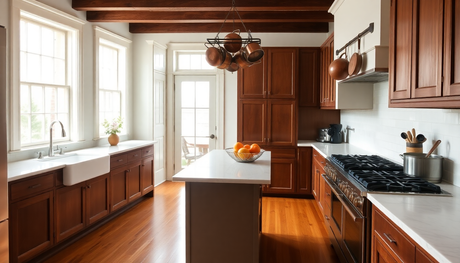
Warm wood tones encompass a range of finishes, from honey and amber hues to deeper walnut and cherry tones. These colors create an immediate sense of warmth and coziness in a kitchen, making the space feel more like the heart of the home rather than a purely functional area. Warm wood tones also pair beautifully with other design elements—they complement stainless steel appliances, work well with both traditional and modern hardware, and create a welcoming backdrop for open shelving or glass-front cabinets.
The resurgence of warm wood tones is partly a reaction to the cool-toned kitchen trend that dominated the previous decade. While cool grays and whites will always have their place in kitchen design, many homeowners are discovering that they prefer the emotional warmth that natural wood tones provide. There's something inherently comforting about warm wood—it evokes feelings of stability, tradition, and natural beauty.
White oak has emerged as a particularly popular choice for warm wood cabinets in New England. This wood species features beautiful grain patterns and a naturally warm tone that ranges from light honey to deeper amber. White oak is also incredibly durable, making it an excellent choice for kitchen cabinetry that will be used heavily for years to come. The grain patterns in white oak are distinctive and beautiful, adding visual interest without requiring elaborate detailing.
Walnut is another warm wood tone gaining popularity in New England kitchens. This rich, sophisticated wood features deeper brown tones with beautiful grain patterns. Walnut cabinets create a more formal, elegant aesthetic compared to lighter wood tones, making them ideal for homeowners who want their kitchen to feel like a refined, curated space.
Cherry wood, with its warm reddish-brown tones, is also experiencing renewed interest. Cherry develops a beautiful patina over time, becoming richer and more beautiful as it ages. For homeowners who appreciate how finishes improve with time and use, cherry cabinets are an excellent choice.
The return of warm wood tones also reflects changing attitudes toward sustainability and natural materials. Many homeowners are increasingly conscious of environmental impact and prefer materials that are renewable and natural. Wood cabinetry, particularly when sourced responsibly, aligns with these values. Warm wood tones also create a connection to nature that resonates with people seeking to create more grounded, authentic living spaces.
At PoshHaus, we've noticed that customers choosing warm wood tones often pair them with other natural materials—stone countertops, natural fiber rugs, and plants—to create kitchens that feel like sanctuaries from the outside world. This holistic approach to kitchen design is becoming increasingly popular and reflects a deeper shift in how people think about their homes.
Modern Farmhouse Kitchen Design: Blending Rustic Charm with Contemporary Comfort
Modern farmhouse has become one of the most beloved kitchen design styles in New England, and for good reason. This aesthetic successfully bridges the gap between rustic charm and contemporary functionality, creating spaces that feel both timeless and current. Modern farmhouse kitchens celebrate the beauty of natural materials, vintage-inspired elements, and clean lines, resulting in spaces that are warm, inviting, and highly functional.
The modern farmhouse style draws inspiration from traditional farmhouses—those beautiful, well-loved homes that have housed families for generations. However, it strips away the purely rustic elements and combines them with modern conveniences and contemporary design sensibilities. The result is a kitchen that honors tradition while embracing the realities of modern life.
In terms of cabinetry, modern farmhouse kitchens typically feature painted cabinets in soft, neutral colors—whites, creams, soft grays, or warm beiges. These painted finishes provide the clean backdrop that modern farmhouse design requires. The cabinet doors often feature simple, classic designs like Shaker-style frames or beadboard details that evoke a sense of history without feeling overly ornate.
Hardware plays a crucial role in modern farmhouse kitchen design. Rather than sleek, minimalist hardware, modern farmhouse kitchens often feature vintage-inspired pulls and knobs in materials like oil-rubbed bronze, brushed nickel, or even ceramic. These hardware choices add character and personality to the space, creating visual interest and reinforcing the farmhouse aesthetic.
Open shelving is another hallmark of modern farmhouse kitchen design. Rather than closing off all storage behind cabinet doors, modern farmhouse kitchens often feature open shelves where beautiful dishes, glassware, and cookbooks are displayed. This approach requires a bit more curation and organization, but it creates a warm, lived-in aesthetic that feels authentic and inviting.
The modern farmhouse style also embraces mixed materials and finishes. You might see painted cabinets paired with natural wood open shelving, or white cabinetry combined with a wood or stone island. This mixing of finishes and materials creates visual interest and prevents the kitchen from feeling too sterile or one-dimensional.
Countertops in modern farmhouse kitchens often feature natural materials like butcher block, marble, or granite. These materials add warmth and character while providing the durability necessary for a hardworking kitchen. Backsplashes in modern farmhouse kitchens might feature subway tiles, shiplap, or even vintage-inspired patterns that add texture and visual interest.
The beauty of modern farmhouse design is its flexibility. It works equally well in a historic New England home with original architectural details or in a newer construction home seeking character and warmth. The style is forgiving—it celebrates imperfection and patina rather than demanding pristine perfection. This makes it particularly appealing to homeowners who want a kitchen that looks beautiful but doesn't require constant fussing to maintain.
At PoshHaus, we've helped numerous customers create stunning modern farmhouse kitchens. The key to success is choosing quality cabinetry that will stand up to years of use, selecting hardware and finishes that reinforce the aesthetic, and incorporating open shelving and display areas that showcase your personal style. Modern farmhouse design is ultimately about creating a space that reflects who you are and how you live.
Contemporary and Minimalist Cabinet Styles: Clean Lines and Functional Beauty
While warm wood tones and farmhouse aesthetics are trending, contemporary and minimalist cabinet styles continue to appeal to New England homeowners who prefer clean lines, uncluttered spaces, and a more modern aesthetic. This style emphasizes function over ornamentation, creating kitchens that feel calm, organized, and sophisticated.
Contemporary cabinet design features flat-panel doors, minimal hardware, and a focus on horizontal and vertical lines. These cabinets often have a sleek, almost architectural quality that appeals to homeowners with modern sensibilities. Contemporary cabinetry works beautifully with stainless steel appliances, concrete or quartz countertops, and minimalist backsplashes.
One of the advantages of contemporary cabinet design is its versatility in terms of color. While warm wood tones and painted whites are popular, contemporary kitchens often feature bold colors like deep charcoal, navy blue, or even black. These darker cabinet colors create a sophisticated, gallery-like quality in the kitchen, making it feel like a curated, intentional space.
Minimalist cabinet design takes the contemporary approach even further, stripping away all unnecessary elements to create the most streamlined, functional kitchen possible. Minimalist cabinets often feature handle-less designs, where the cabinet door itself serves as the pull. This creates an incredibly clean aesthetic with no visual clutter. Minimalist kitchens also often feature integrated appliances that blend seamlessly with the